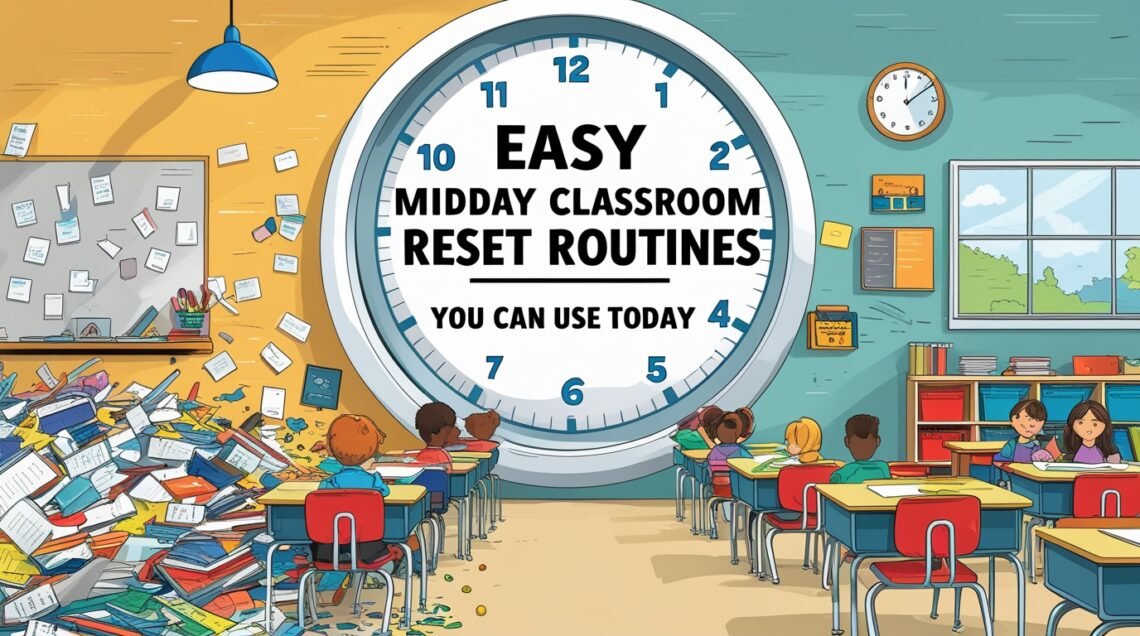
I discovered that the best way to regain control and transition into a focused afternoon is not by tightening the reins, but by using quick, simple midday classroom reset routines. These routines take less than ten minutes, require no extra supplies, and transform a frantic, wiggly class into a focused learning environment. This is my personal collection of sanity-saving strategies that I use every single day to ensure a peaceful, productive afternoon. If you need a simple fix for that post-lunch slump, these easy classroom transitions are your answer.
The Post Lunch Energy Bomb:
The energy shift around noon is a cocktail of biology and social interaction. After a period of unstructured play and a spike in simple carbohydrates, children are primed for noise and movement. Asking them to immediately transition from shouting outside to silent reading inside is asking them to fail.
What I realized was that I needed a deliberate, structured break between the chaos and the curriculum. My goal shifted from demanding silence to achieving focused attention. These simple routines work because they address the two main post-lunch issues: sensory overload and the need for active listening. Getting the wiggles out first is always faster than trying to suppress them.
Routine One: The Movement Reset (5 Minutes):
The most effective way to calm a hyper child is to allow them safe, structured movement. This routine focuses on using large muscle groups and crossing the midline of the body, which helps organize the brain for learning. This is my go-to when the noise level is off the charts.
1. The Quiet March:
When the students first enter, they are usually buzzing. I used to immediately ask for silence, which never worked. Now, I use the Quiet March.
- My Experience: I put on a very simple, fast-paced instrumental song, nothing with lyrics. As they walk to their seats, they must march, lifting their knees high, but they must keep their mouths absolutely silent. The rule is simple: the volume of your feet can be loud, but your mouth must be silent.
- The Benefit: This simple structure allows them to release physical energy while simultaneously focusing on the single task of self-control, silencing their voice. By the time they reach their seats, the main energy spike has been redirected, and they are physically ready to sit. This small exercise is fantastic for classroom management.
2. Cross the Midline Workout:
This is a favorite brain break that takes less than two minutes but provides huge benefits for focus. Crossing the midline, the imaginary line running down the center of the body, forces the left and right hemispheres of the brain to communicate, which is crucial for complex tasks like reading and writing.
- My Experience: I have the students stand beside their desks. We do four simple movements: Elbow to Knee (right elbow to left knee, then left elbow to right knee), Shoulder Taps (right hand taps left shoulder, left hand taps right shoulder), Arm Circles (small, slow circles forward, then backward), and Spinal Twist (a gentle turn to the right and then the left).
- The Benefit: We do eight slow repetitions of each movement. The slower the better. This controlled, deliberate movement is a quiet way to get the oxygen flowing and the brain organized. I immediately notice a difference in their ability to transition to seated work after this simple routine. It is a powerful brain break that prepares them for the afternoon.
Routine Two: The Sensory Reset (3 Minutes):
Sometimes the problem is not movement; it is sensory overload from the bright lights, loud noises, and crowding of the lunchroom. This routine is designed to calm the nervous system and draw focus inward, promoting mindfulness for kids.
3. The Five-Finger Breathing Exercise:
This is the most effective tool I use to teach children self-regulation. It is simple, quiet, and highly visual. I use it immediately before any focus-demanding task like math or reading.
- My Experience: I have the students hold one hand out, palm up. I guide them to use the index finger of the other hand to trace the outline of the outstretched hand. Inhale as they trace up the thumb; exhale as they trace down. Inhale up the index finger; exhale down.
- The Benefit: We complete the entire hand, using five deep breaths. This forces them to focus on two things simultaneously, a physical movement and their breath. This simple routine is a powerful lesson in mindfulness and immediately calms the whole room. The audible deep breathing from the students becomes the new, calming sound of the classroom, replacing the buzzing. It is my favorite go-to for creating classroom calm.
4. Desk Tidy and Object Focus:
External disorder directly contributes to internal chaos. Before any serious work begins, the student’s immediate environment must be clean.
- My Experience: I use a musical prompt for a quick Desk Tidy. I play one minute of classical or low-tempo jazz music, and the students use that minute to clear their desk of everything except the specific object we need for the next lesson (e.g., only the math book and a pencil). Nothing else can be visible.
- The Benefit: This routine provides a quick burst of productive physical activity while establishing a clear visual boundary for the afternoon. A clean desk signals to the brain that it is time to focus. I often follow this with a quick instruction: “Put your pencil down. Look only at your math book.” This highly specific direction is critical for directing student attention.
Routine Three: The Listening Reset (2 Minutes):
One of the biggest struggles after a busy break is getting students to listen carefully to multi-step instructions. Their attention spans are fried. This routine focuses on recalibrating their ears and their auditory processing skills.
5. Sharpening Nonverbal Communication:
This game is a brilliant, silent way to gauge and improve the focus level of the entire class. It requires constant active attention from every student.
- My Experience: The students stand next to their desks. I introduce a soft stress ball or a beanbag. The goal is to pass the ball around the room using only eye contact and hand gestures, no verbal sounds are allowed. If a student makes a sound, drops the ball, or throws it to someone not looking at them, they must sit down.
- The Benefit: The game naturally self-regulates the class noise and demands high levels of nonverbal communication and active listening. The students who are usually noisy are now invested in maintaining silence. It is an incredibly powerful, low-key competition that brings every child’s attention to a sharp point. This is an excellent classroom game for improving focus.
6. The Whisper Chain:
This is a fun, old-school routine that works wonders for forcing careful, focused listening to verbal instructions. It is excellent for setting the stage for a complicated afternoon task.
- My Experience: I start by whispering a short, silly sentence into the ear of the first student in the row: “The happy purple unicorn loves eating peanut butter sandwiches.” That student whispers it to the next, and so on, until the last student announces the final message.
- The Benefit: The inevitable distortion of the message is a great laugh, but the key teaching moment is the discussion afterwards: “What happens when we do not listen carefully to every single word?” This demonstration highlights the importance of precise listening. I immediately follow this with the actual afternoon instructions, and the level of student attention is noticeably higher. This is a very effective classroom transition.
My Philosophy:
The most important lesson I learned is that the power of these midday classroom reset routines comes from consistency.
- Predictability is Peace: Children thrive on predictability. If they know that every day after lunch, they do the Quiet March and Five-Finger Breathing, their brains automatically enter the “focus mode” without me having to exert excessive energy. The routine becomes a habit that does the work for me. This classroom routine is my most effective passive behavior management strategy.
- The Power of Explanation: I always explain why we are doing the routines. I tell them, “We are crossing the midline to connect the two sides of your brain so your thinking is fast for math.” This transparency gives them a sense of ownership and teaches them lifelong skills in self-regulation. They are more likely to buy into the routine if they understand the brain science behind it.
- Less Time Lost, More Time Gained: Spending five to ten minutes on a structured, purposeful midday classroom reset is not a waste of time. It is an investment that prevents twenty minutes of correcting off-task behavior later. It is the single most valuable ten minutes of my entire teaching day. The result is a calmer classroom, a more focused afternoon, and a much less exhausted teacher at the end of the day.
If your afternoons are a struggle, stop fighting the chaos and start engineering the calm. These simple routines are your secret weapon for transforming your teaching day.
FAQs:
Q1: Why is movement necessary immediately after lunch?
A: Structured movement, like the Quiet March, allows students to safely release high energy and wiggles before seated work.
Q2: What is the purpose of crossing the midline in the classroom?
A: Crossing the midline forces the left and right brain hemispheres to communicate, helping to organize the brain for complex learning tasks.
Q3: How long should a midday classroom reset routine last?
A: The entire routine should be short and impactful, ideally lasting between five and ten minutes to maximize focus time.
Q4: What is the Five-Finger Breathing Exercise used to teach?
A: It is used to teach children a visual, simple technique for self-regulation and immediate calming through deep, focused breaths.
Q5: How does the Desk Tidy routine help with focus?
A: A clean, uncluttered desk signals to the brain that it is time to concentrate on the specific material being used, aiding student attention.
Q6: Why is it important to explain the routine’s purpose to the students?
A: Explaining the brain science behind the routines gives students ownership, increases buy-in, and teaches them lifelong self-regulation skills.
